Skip to content

Our services & parent resources

Speech pathology services on the Gold Coast for your child

Evidence-based speech pathology services — with practical resources to support families.

Parent reviewing information with a speech pathologist

Speech Pathology Services

How we support children — and helpful resources for parents

Our team is made up of passionate paediatric speech pathologists and therapy assistants who care deeply about helping children grow. We are united by our commitment to high-quality therapy, ongoing learning, and creating a supportive space for children and families. Our therapists work with children up to 12 years of age to ensure we can confidently provide high quality assessment, diagnosis, and intervention in our specialty areas.

We’re a caring team of paediatric speech pathologists and therapy assistants providing high-quality intervention for children up to 12 years of age

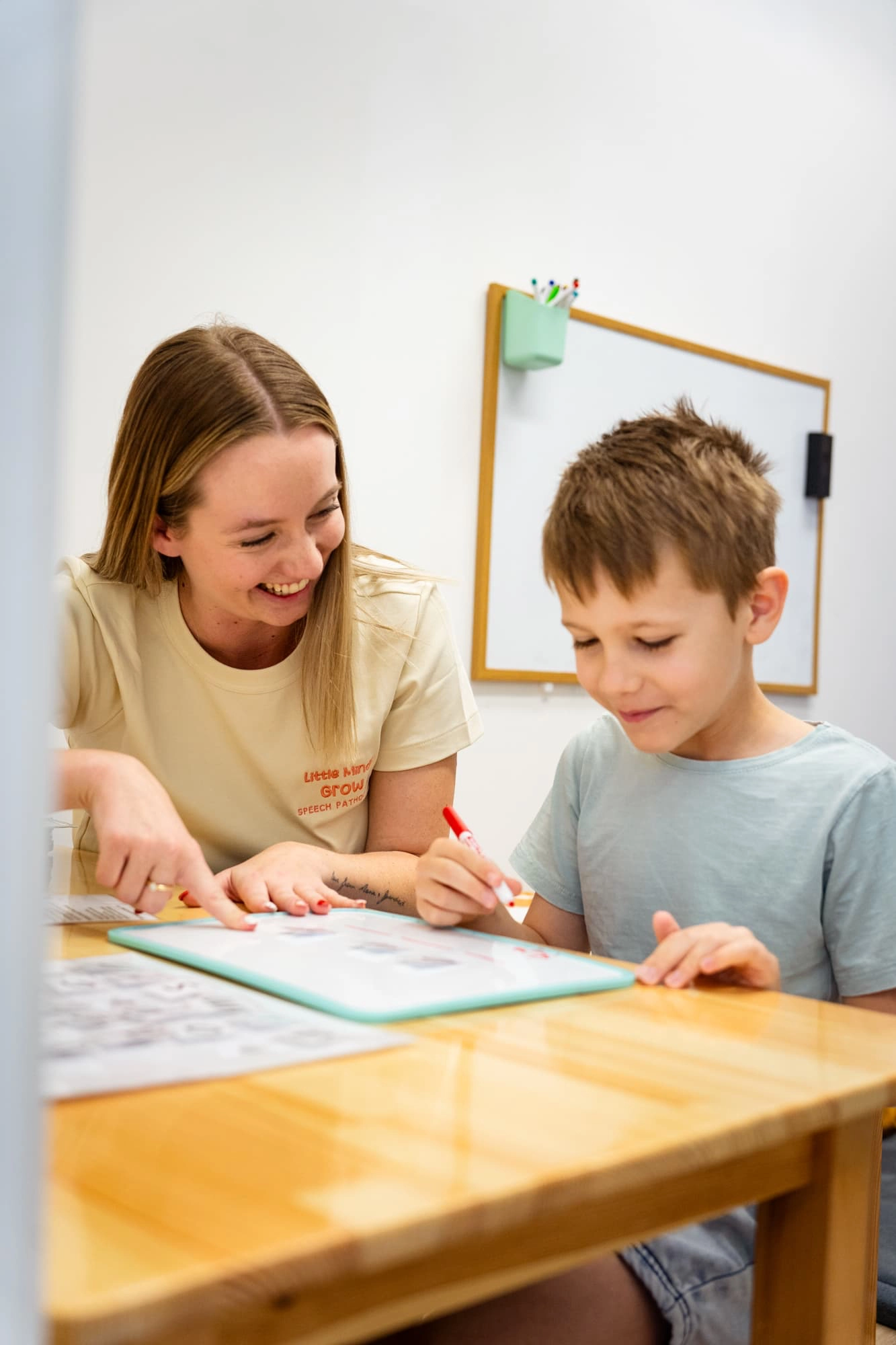
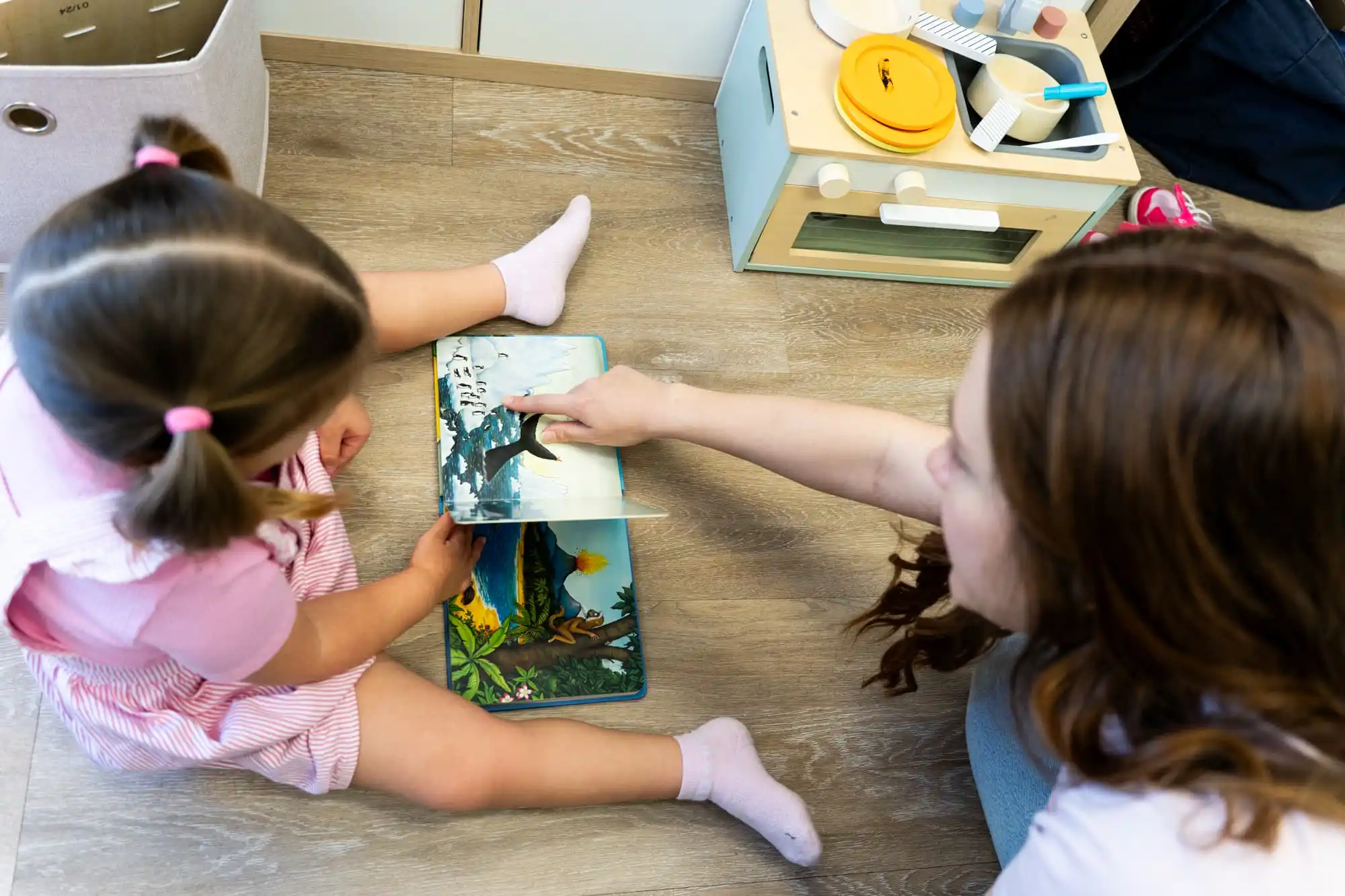
Paediatric children's literacy therapy support session

Core service

Literacy

  • Writing
  • Reading
  • Spelling
  • Phonological Awareness

We support children who find reading, spelling or writing challenging. Research backed therapy focuses on building strong foundations, improving confidence, and helping children acquire the skills they need to succeed in school.

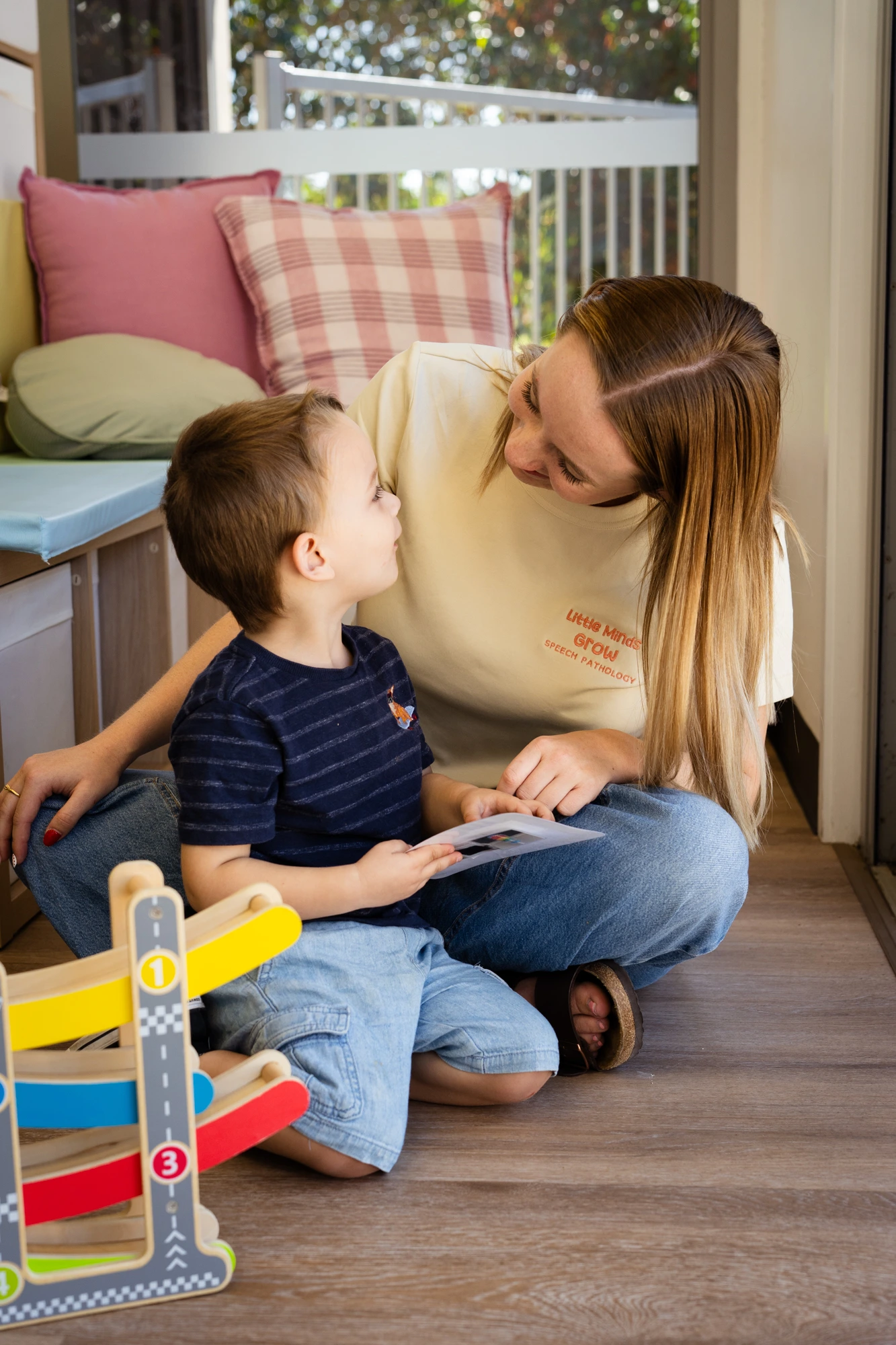
Paediatric children's speech therapy support session

Core service

Speech

  • Articulation
  • Phonology
  • Motor Speech
  • Sounds

We support children who have difficulty making sounds clearly and accurately, impacting how well they are understood when speaking. Speech sound therapy builds clarity and confidence so children can be understood in every day life.

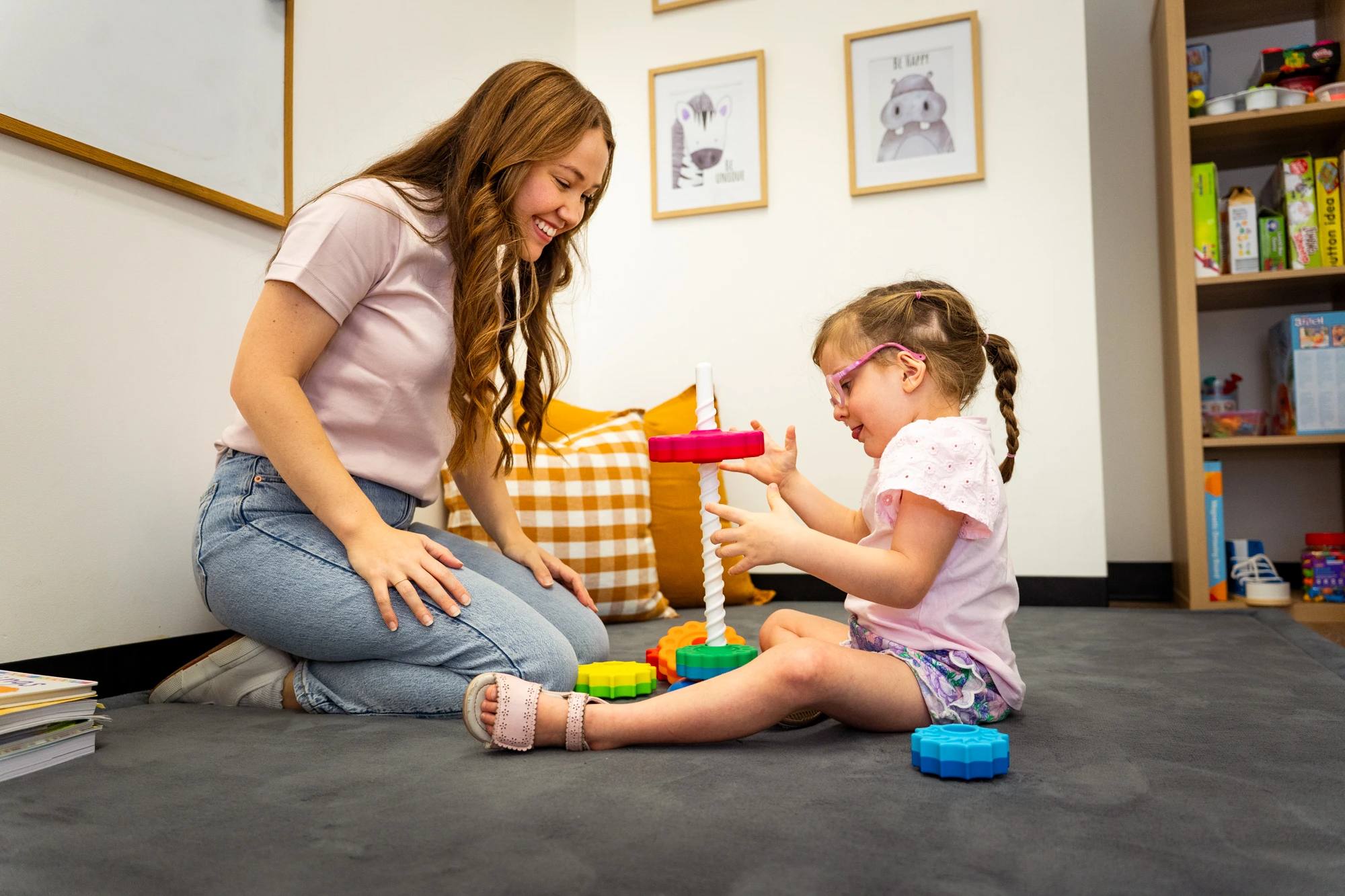
Paediatric children's language therapy support session

Core service

Language

  • Receptive
  • Expressive
  • DLD
  • Social language

We support children who have difficulty understanding (receptive language), or difficulty talking (expressive language), like children with Developmental Language Disorder (DLD). Therapy focuses on building vocabulary, sentence structure, and much more!

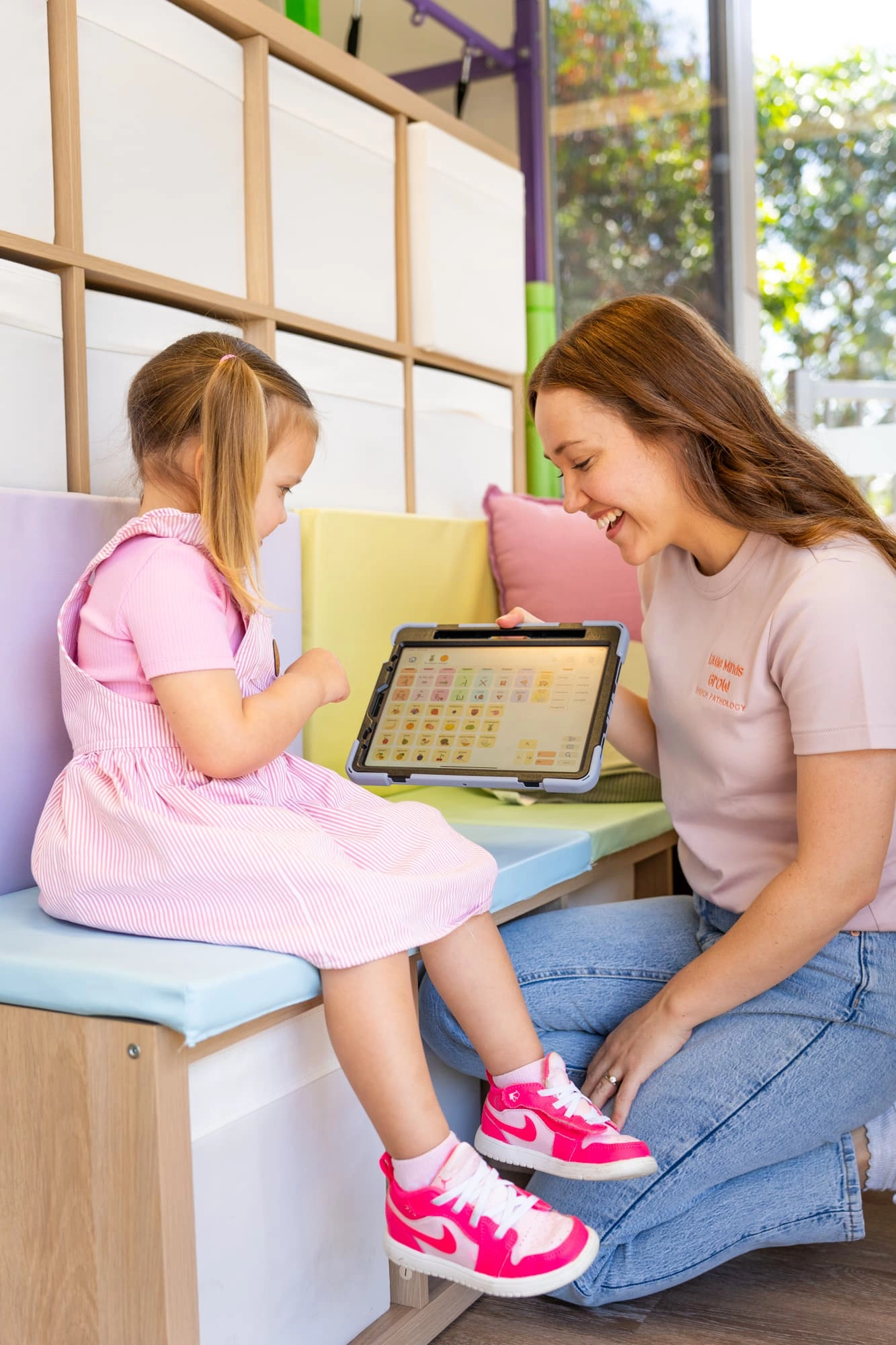
Paediatric children's AAC therapy support session

Core service

AAC

  • Low-tech
  • High-tech
  • Visual aids
  • Key Word Sign

We support children with complex communication needs (CNN), including those who are non-speaking, by gathering information and assessing individual needs, and recommending and implementing appropriate AAC supports.

Additional services

How else we can help with speech pathology

Beyond our core speech pathology services, we offer a range of supports that help families and clinicians get the most out of speech therapy.

If we don't cover a service required or you would like to know more, please don't hesitate to reach out. We maintain a network of trusted providers who may be able to assist.

Social Skills

We build on sharing, turn-taking, waiting and understanding emotions. This targets non-verbal communication such as facial expressions, eye contact and gesturing supporting positive relationships.

Small Group Programs

School holiday small group programs focus on language, literacy, or social skills. Programs may include Story Champs, Movement & Phonological Awareness, and We Thinkers.

Parental Education

While Parent Education is included in therapy sessions, we can provide additional specialised targeted strategies to help families confidently support learning at home.

Clinical Supervision & Mentoring

We offer supervision and mentoring for new graduate and early career speech pathologists and allied health professionals seeking up-skilling, supporting professional growth.

Therapy Assistants

With access to LMG Allied Health Assistants, parents can access lower-cost options for clients seeking additional therapy, alongside their clinician.

What is a Speech Pathologist?

And how do I know if my child requires one?

Are speech pathologists medical professionals?

Speech pathologists are university-trained allied health professionals who support children’s communication, learning, and participation using evidence-based therapy approaches.

What can an SLP help with in paediatrics?

LMG Paediatric Speech-Language Pathologists support children with speech, language, literacy and AAC difficulties across everyday environments such as home, school, and kindy. LMG does not provide therapy services for feeding/swallowing, fluency or voice disorders/difficulties.

Paediatric Speech-Language Pathologists work with children who may need support with communication, or who experience feeding or swallowing difficulties. While speech pathologists may specialise in different areas, our work supports children across a wide range of developmental needs, including: speech, language, literacy, AAC (multimodal communication). LMG does not specialise in or provide therapy for children with feeding/swallowing difficulties, fluency (stuttering) or voice disorders.

How can Little Minds Grow help?

Little Minds Grow provides accessible, family-centred paediatric speech pathology services across the northern Gold Coast, supporting children to build confidence, independence, and meaningful participation in daily life.

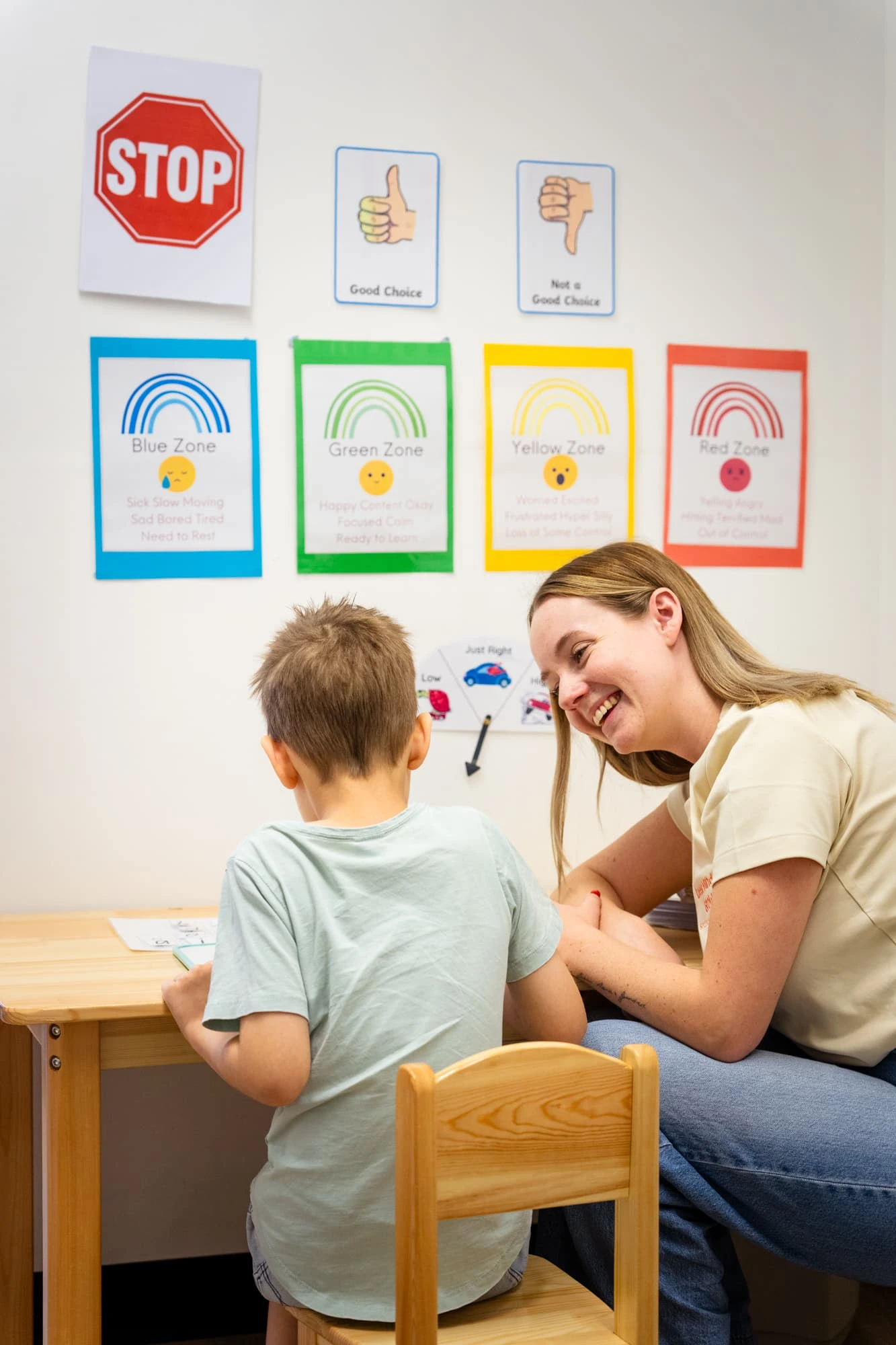
Speech pathologist supporting a child during a paediatric speech therapy session
A speech pathologist supporting a child during a therapy session

Parent resources

A place to learn and understand — explore the resources below

We’ve shared an overview of our services and resources to help you better understand your child’s needs. If you’re unsure where to start, we’re here to help.

Find out more about SLP services

Parent Resources

A place to learn and understand more about our services

Core service

Literacy Difficulties

Understanding literacy difficulties

  • Writing
  • Reading
  • Spelling

Children can experience challenges with literacy as they grow, with some difficulties resolving on their own and others requiring assessment and targeted support. At Little Minds Grow, we help children build strong, confident literacy skills that transfer meaningfully to both school and home life.

Overview & Signs to Look For

Literacy is the ability to listen, speak, read, and write, and it plays a vital role in a child’s learning, confidence, and wellbeing. Unlike speech and language development, literacy does not develop naturally — it must be explicitly taught. Research consistently shows that the most effective way to teach reading and spelling is through explicit, systematic phonics instruction, where children learn how sounds link to letters and how words are built.

Children who may benefit from literacy support often show difficulties with learning letter–sound relationships, blending sounds to read, spelling words, or keeping up with peers at school. Literacy challenges can be especially common for children with learning differences such as Dyslexia, Developmental Language Disorder, ADHD, intellectual disability, and related learning needs. There should be no guessing involved when learning to read and write — strong foundations matter!

How we can help

At Little Minds Grow, we provide evidence-based literacy intervention using a systematic synthetic phonics approach. Our therapists are trained in Sounds~Write, a structured program that explicitly teaches children how sounds and letters work together, how to blend sounds to read, and how to segment words to spell — progressing from simple to more complex patterns in a clear, sequential way.

We also support pre-literacy and early literacy skills, including phonological awareness, to help young children build strong foundations before starting school or in the early years of schooling. Therapy places equal importance on reading, spelling, and writing, supporting skills such as encoding, orthographic mapping, and early morphology knowledge.

For children who need additional 1:1 support beyond the classroom, speech pathology intervention can make a meaningful difference — supporting academic progress while also building confidence and positive self-esteem as learners.

Additional literacy resources for parents

Here are helpful tools used during therapy and available for families to explore at home:

Paediatric childrens literacy therapy support session
Literacy support focuses on reading, spelling, and writing skills.

Core service

Speech Difficulties

Understanding speech sound difficulties

  • Articulation
  • Phonology
  • Motor Speech
  • Sounds

We work with children who experience challenges with speech sound development, with some patterns resolving naturally and others needing support. At Little Minds Grow, we help children develop clearer speech and confidence across everyday settings.

Overview & Signs to Look For

Speech development refers to a child’s ability to produce sounds clearly and accurately when speaking. While it’s common for young children to make speech errors as they learn, most children naturally grow out of these patterns over time. When difficulties persist beyond what is age-appropriate, specialised support from a children’s Speech Pathologist may be helpful.

Speech sound difficulties involve several systems working together, including:

  • Articulation: how sounds are made using the lips, tongue, and mouth
  • Voice: breath support and vocal quality
  • Fluency: the rhythm and flow of speech

Functional Speech Sound Disorders (SSD) are commonly described in two main ways:

  • Articulation difficulties: where a child struggles to physically form sounds, leading to sound substitutions, omissions, distortions, or additions.
  • Phonological difficulties: where a child shows predictable patterns of sound errors across words, even if they can sometimes produce the sound correctly.

Because phonological difficulties are closely linked to later language and literacy development, early identification and support are important. Functional speech sound disorders differ from organic speech difficulties, which are related to structural, neurological, or sensory causes.

How we can help

At Little Minds Grow, we provide evidence-based assessment and intervention for children with speech sound difficulties. Therapy is tailored to your child’s needs and may focus on developing accurate sound production, improving speech clarity, and supporting phonological awareness skills that underpin both speech and literacy.

Our approach is structured, child-friendly (meaning… FUN), and goal-directed, with clear strategies shared to support progress beyond sessions. For children who need additional 1:1 support alongside classroom learning, speech therapy can play a key role in improving intelligibility, confidence, and participation at home, school, and in the community.

A note on Orofacial Myology: In some cases, factors such as oral muscle function, tongue posture, or swallowing patterns may impact a child’s speech. While Little Minds Grow does not provide orofacial myology services, we work closely with trusted orofacial myologists and can refer families where this support may be beneficial as part of a collaborative care approach.
Additional speech resources for parents

Here are helpful tools used during therapy and available for families to explore at home:

Paediatric childrens speech therapy support session
Speech therapy supports clearer speech and confident communication.

Core service

Language Difficulties

Understanding language development and differences

  • Receptive
  • Expressive
  • DLD
  • Social language

Some children experience challenges understanding or using language as they grow, with some needing extra support. At Little Minds Grow, we help children build practical language skills for everyday communication and learning.

Overview & Signs to Look For

Language is the way we convey meaning by speaking, writing, and signing for it to be interpreted by listening, reading, and watching.

We can break language into two main categories:

  • Receptive Language:  the ability to understand language, such as concepts and ideas, following directions and understanding questions, and more.
  • Expressive Language: the ability to use language, such as sharing information, expressing our thoughts, ideas, and feelings, and having our wants and needs met, and more.

Without going into too much depth, each category of language can be broken down even further into five different domains:

  • Syntax
  • Morphology
  • Phonology
  • Semantics
  • Pragmatics

There are different ways that we develop or acquire language skills, with language development broken up into two main sections:

  • Analytic Language Development: This is the “milestones” pathway — first words, then short phrases, then more complex sentences.
  • Gestalt Language Development: This is when children learn language in “chunks” first (often echolalia), then break it down over time.
How we can help

At Little Minds Grow, we assess and support both receptive and expressive language skills, tailoring therapy to how your child naturally processes and learns language. Intervention may focus on building understanding, expanding vocabulary, developing sentence structure, supporting social communication, and helping children use language more flexibly and meaningfully.

We work with children who develop language analytically and those who are gestalt language processors, using evidence-informed, respectful approaches that support communication growth. Therapy is individualised, child-centred, and shared with families so strategies can be carried over into everyday life at home, school, and in the community.

Additional language resources for parents

Here are helpful tools used during therapy and available for families to explore at home:

Paediatric childrens language therapy support session
Language therapy supports understanding, expression, and everyday communication.

Core service

Augmentative & Alternative Communication (AAC)

Supporting communication beyond spoken words

  • Low-tech
  • High-tech
  • Visual aids
  • Key Word Sign

Some children need additional ways to communicate beyond spoken words. AAC supports children to express their needs, ideas, and choices.

Overview & Signs to Look For

Augmentative and Alternative Communication (AAC) includes any system, tool, or method that supports a child to communicate. This may involve high-tech options (such as speech-generating devices or apps) or low-tech options (such as paper-based boards), and can be aided (using tools or materials) or unaided (using the body, such as gestures or sign).

Auslan is a complete language used by the Australian Deaf community, while Key Word Sign (KWS) borrows selected Auslan signs alongside verbal spoken language to support communication. At LMG, we use Key Word Sign to highlight key words, support understanding, and encourage communication while continuing to model speech.

AAC may be helpful for children who are non-speaking, minimally speaking, or whose speech is not consistently understood. Access to robust AAC systems with a full vocabulary is essential for children with complex communication needs, allowing them to express their thoughts, needs, and choices and to participate meaningfully in everyday life with autonomy and dignity.

How we can help

At Little Minds Grow, we support both speaking and non-speaking children who may benefit from AAC using a strengths-based, child-centred approach. We assess each child’s communication needs, preferences, and environments to recommend AAC systems that support meaningful communication through authentic interaction and connection.

A core part of successful AAC use is the involvement of communication partners — parents, carers, educators, and family members. We take communication partner training seriously, as modelling and consistent use by the people around the child can make or break successful AAC implementation. Our therapy focuses not only on the child, but also on equipping families and support teams with the skills and confidence to model AAC and support communication across everyday settings.

Additional AAC resources for parents

Here are helpful tools used during therapy and available for families to explore at home:

Paediatric childrens AAC therapy support session
AAC supports communication using visual supports and speech devices.

Ready to grow together?

We'd love to have a chat

If Little Minds Grow feels right for your child, contact us to check availability and next steps.

Please review the service area map before enquiring — if you’re outside our service area, we can help connect you with a local speech pathologist where possible. For non-therapy enquiries, please email us.

Map showing Little Minds Grow service area